Let’s learn about “what are zero knowledge proofs” today!
Zero-Knowledge Proofs (ZKPs) are an advanced method in cryptography that lets someone show they know a certain piece of information without actually sharing it. This technology is very important for protecting privacy and security in many types of digital transactions and communications, especially in blockchain systems, modern token ecosystems, and emerging platforms like Zavros Network.
As the need for data protection increases, especially in situations where openness and public verification are needed, ZKPs are a great way to help. Let’s see a zero knowledge proof example, it lets people on public blockchain networks check whether transactions or data are correct without showing any private or sensitive information. This lets users show that they know private information without actually giving it away, making sure that only the right information is shared.
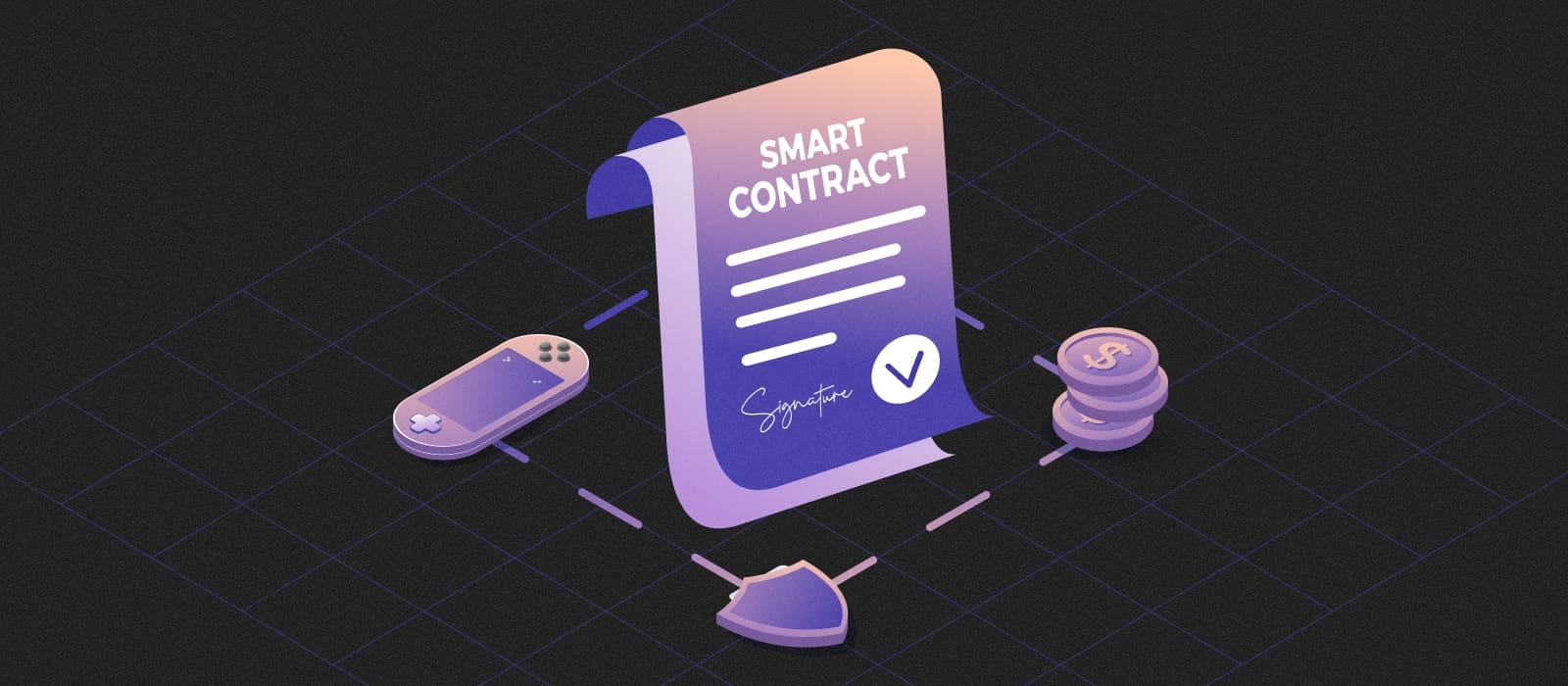
The best thing about ZKPs is that they can prove a statement or transaction is correct without showing any of the data that goes with it. This approach raises security and trust because it lowers the chances of private data being lost or used in the wrong way. In ZKP blockchain and smart contract use cases, alongside concepts like token standards explained and decentralized identity, ZK Proofs are being used more and more to protect privacy while keeping the system honest and trustworthy.
Zero-Knowledge Proofs let companies and people safely connect with each other online while keeping their private data safe. In today’s digital world, ZKPs are a must-have tool for keeping data private. They can be used to make sure someone is authentic, to help with safe transfers or private contract signing.
How Do Zero-Knowledge Proofs Work in Blockchain?
Zero-Knowledge Proofs (ZKPs) are a very important part of blockchain activities that help make them more private and secure. Using these ways, one person can show another that a statement is true without giving away any other information. In Zero Knowledge Proof Blockchain, make sure that data integrity is preserved and secret information stays private.
ZKPs work based on a set of key rules that make sure they are safe and clear:
- Completeness: An honest prover should be able to fully convince a validator that a statement is true.
- Soundness: A dishonest prover can not fool the verifier into thinking that a false statement is true.
- Zero-Knowledge: The two parties can only see the information in the statement that is being checked and not any other data.
Let’s look at a simple example of how Zero-Knowledge Proofs work in a blockchain transaction:
- Person A, also known as the Prover, wants to use a privacy-focused cryptocurrency like ZCash to make a trade. This ensures that no one can see any information about the transaction, such as the amount or the recipient’s address, an approach increasingly important in DeFi, governance, and what is staking in crypto models.
- Person B, who is a verifier, is waiting for a transaction from Person A. However, Person B cannot see any private information like the total amount of assets in Person A’s wallet.
- Person A uses encryption on the transaction information to keep them private.
- The encrypted transaction and Zero-Knowledge Proof (ZKP) from Person A show that the transaction is real without giving away any private information.
- The ZKP is checked by nodes in the blockchain network to make sure the transaction is valid and meets the rules.
- If the ZKP is checked out correctly, Person B will agree to the deal.
- The transaction is finished, and ZCash moves from Person A to Person B. The record is now on the blockchain and can not be changed.
Core Components of a Zero-Knowledge Proof System
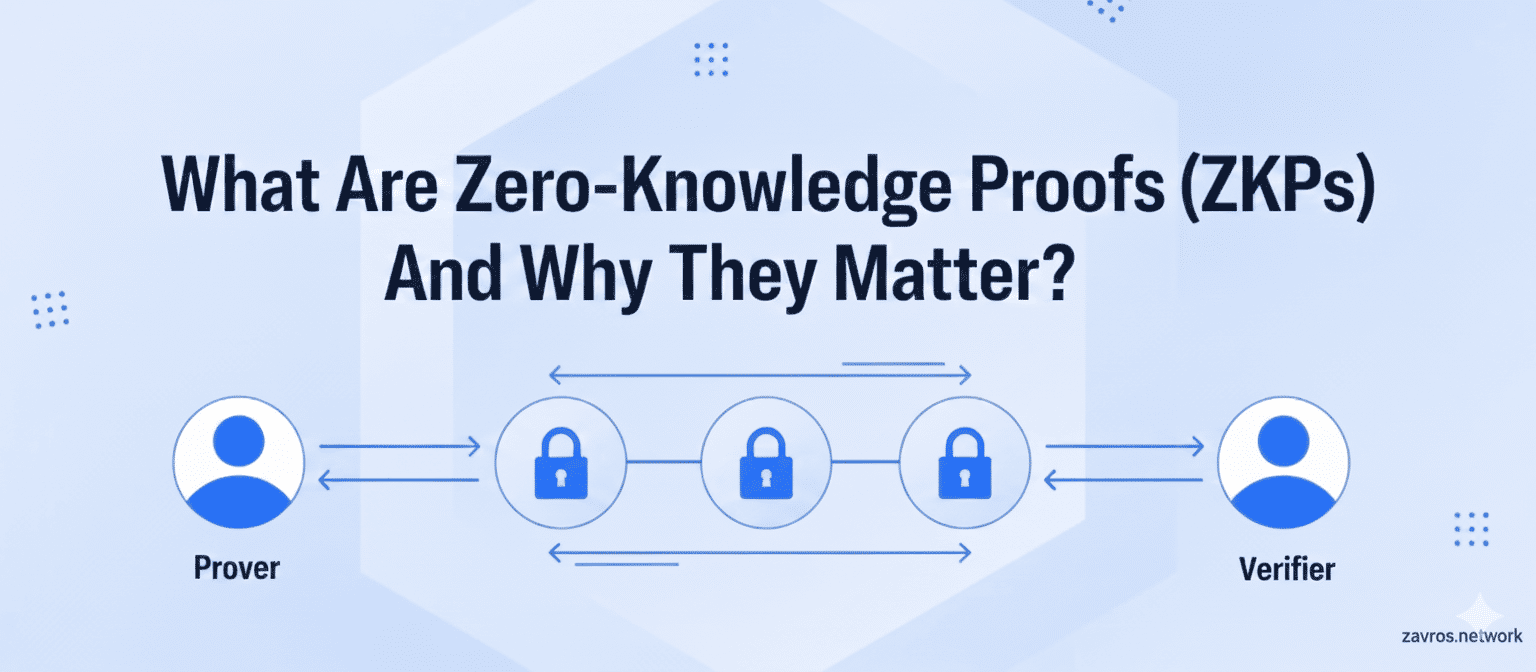
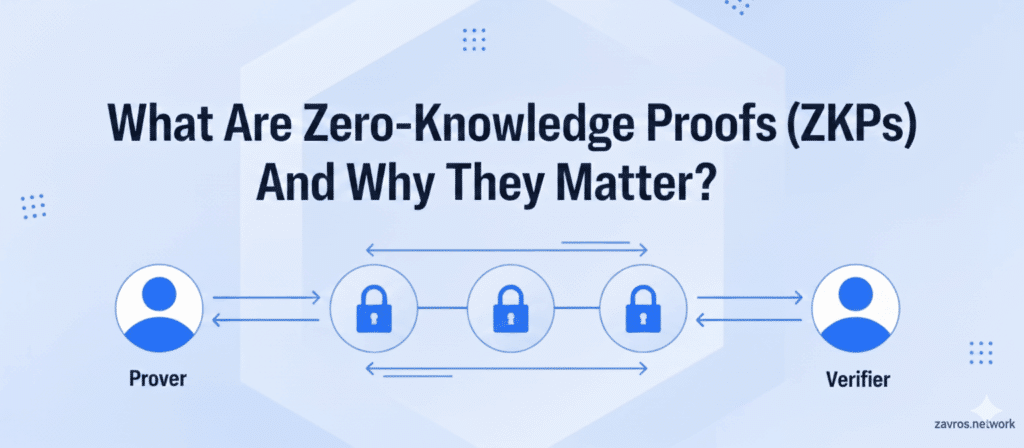
There are at least two people in a Zero-Knowledge Proof (ZKP) system: the Prover and the Verifier. Each of these jobs is very important for making sure that the proof process stays safe and quick.
- Prover: Prover makes a mathematical proof to prove a statement or event. This proof must convince the verifier without revealing more. The prover holds the private data and has to show that they know about it without giving it away.
- Verifier: The verifier’s job is to check the proof that the prover gives and see if it is correct. The validator depends on the proof from the prover because they can not see the data themselves. Based on the proof given, the verifier says either that the statement or transaction is true or it isn’t.
In most cases, the prover and the verifier communicate to each other several times during the process. This conversation lowers the chance of either person giving wrong or dishonest information. It also verifies the proof and eliminates the risk of leaking sensitive data.
In a Zero-Knowledge Proof system, these parts work together to make sure that transactions or claims are genuine, safe, and private. For this reason, it is a very useful tool for safeguarding privacy in digital systems such as blockchain.
Different Types of Zero-Knowledge Proofs Explained
Different Zero-Knowledge Proofs (ZKPs) fulfill different privacy and scalability needs. These are the main types:
zk-SNARKs
Short proofs called zk-SNARKs, or “Succinct Non-Interactive Arguments of Knowledge,” help make Ethereum and ZCash transactions private. Users can show they have information without actually giving it away, which makes these perfect for private blockchain uses.
zk-STARKs
Scalable Transparent Arguments of Knowledge, or zk-STARKs, work like zk-SNARKs but are better at scaling and being accessible about how they work. Since they do not need a trusted setup, they are more safe and can be used on bigger blockchain networks.
PLONK
PLONK (Permutations over Lagrange Bases for Noninteractive Arguments of Knowledge) is a universal ZKP system that lets many different kinds of programs find answers that can be scaled up or down. It is quick and has a setup that can be used multiple times for many different people and situations.
Bulletproofs
Bulletproofs are small, non-interactive proofs that show a value is within a certain range without showing the value itself. They are mostly used in ZKP cryptocurrencies like Monero so that people can make private, quick transfers.
zk-SNARKs vs zk-STARKs: Understanding the Key Differences
SNARKs and STARKs are two popular Zero-Knowledge Proofs (ZKPs) that enable blockchain applications to keep data private and usable. Though they share a goal, these systems are fundamentally different.
zk-SNARKs
zk-SNARKs (Succinct Non-Interactive Arguments of Knowledge) are small proofs that are very useful and easy to check. To make proofs that are short and do not need a lot of computer power, they use elliptic curve zero knowledge cryptography. This makes them ideal for Ethereum and ZCash, which value secrecy and speed. Zk-SNARKs require an acceptable configuration, which can be hazardous if done incorrectly.
zk-STARKs
Better zk-STARKs have replaced zk-SNARKs. They are similar, but these open-source, scalable ones are better. zk-STARKs work without a trusted setup, making them safer than zk-SNARKs.
Built to conduct more calculations, they operate better with large blockchain apps. Anyone may verify zk-STARK proofs, making the technology more open.
Key Differences
- Trusted Setup: zk-SNARKs need a trusted setup, but zk-STARKs don’t.
- Scalability: zk-STARKs are better for big, complicated systems because they can grow with them.
- Transparency: zk-STARKs are more open because anyone can check their proofs.
- Efficiency: zk-SNARKs usually have smaller proofs and faster verification times.
zk-SNARKs: How Does Zero Knowledge Proof Work and Their Benefits
zk-SNARKs, which stands for “Succinct Non-Interactive Arguments of Knowledge,” are a very useful security tool that lets someone show a statement is true without having to share any data that supports it. Blockchain systems like ZCash and Ethereum made zk-SNARKs widely known. They are made to protect the privacy and scalability of transactions on public blockchains.
How zk-SNARKs Work
Zk-SNARKs enable a prover to prove a statement while maintaining private information. The non-interactive proof allows the prover to avoid direct communication with the verifier.
The common reference string (CRS) is at the heart of zk-SNARKs. This CRS is shared between the person who proves something and the person who checks it. It lets the prover show that they really do know a certain piece of information.
In the first setup phase, which makes the CRS, random values are made and then encrypted. Once the CRS is set up, it can be used to make short, non-interactive proofs that show the statement is true and keep private data safe at the same time.
This method skips the back-and-forth contact between the prover and verifier. This makes the verification process faster and protects privacy.
Benefits of zk-SNARKs
- Privacy: zk-SNARKs let you make private transactions on a public blockchain. We keep the transaction’s amount and participants private while allowing others to verify it.
- Efficiency: zk-SNARKs are efficient due to their tiny proof size and fast verification. These proofs are ideal for blockchain systems that require fast processing and low-cost transactions due to their short length and low computational requirements.
- Scalability: zk-SNARKs help blockchain systems grow by allowing a lot of transactions without sacrificing privacy. Their clear proofs of correctness guarantee that only the most important information is sent. This keeps the system lightweight even when there are a lot of transactions.
- Security: You do not need to trust a third party as much when using zk-SNARKs. The setup phase is very important, but it can only be done once and used by everyone. This lowers the possible risks that could happen when trying to keep trust in systems that are decentralized.
Enhancing Privacy and Data Security Through Zero-Knowledge Proofs
Zero-Knowledge Proofs (ZKPs) are made to improve privacy and data security. This makes them perfect for uses where it is very important to keep private data safe. ZKPs were first used by privacy-focused blockchains like Zcash and Monero, but now they have more applications, especially in business contexts.
Zero-knowledge proofs let businesses show that they follow rules and use the right processes with customers and partners without giving away private information. Also, ZKPs make it easier for different Web3 networks, like Layer 1 and Layer 2, to work together, which makes it easier for people to communicate across chains. This both protects data and simplifies independent transactions. It boosts both privacy and speed across all blockchain systems.
Benefits and Limitations of Zero-Knowledge Proof Technology
Zero-Knowledge Proofs (ZKPs) are a great way to make things more private and safe, especially in open systems like public blockchains. The main benefit of ZKPs is that they keep private information safe while checking transactions or smart contracts.
People and businesses can use this technology to prove that a transaction or data point is correct without giving away any information. This is very important in areas like healthcare, finance, and supply chain management.
ZKPs keep trade secrets safe and follow the rules for protecting PII in GDPR and HIPAA. Businesses can use public blockchains without giving away private information due to zero-knowledge proofs. It protects privacy without giving up transparency or responsibility.
But ZKPs are not perfect. The technology needs a trusted setup, and it can be expensive to use, especially when scaling for big datasets. On top of that, ZKPs can make things more difficult by adding complexity to blockchain systems. This is because they need more advanced technology and knowledge to be used correctly.
Even with these problems, the benefits of ZKPs are much greater than the drawbacks. ZKPs protect privacy, follow the rules, and handle data safely. As technology moves forward, its current limitations will most likely fade away. This will allow ZKPs to be used in even more applications and situations across all types of businesses.
The Future of Zero-Knowledge Proofs in Decentralized Systems
As people become more worried about privacy and security in decentralized systems, Zero-Knowledge Proofs (ZKPs) are going to become more and more important to the blockchain environment. Growing awareness of data security and the requirement for scalability and efficiency make ZKPs a promising technology.
As Ethereum’s Layer 2 protocols get better, ZKPs should make transactions faster, cheaper, and more scalable. As blockchain networks grow and people want transactions that are faster and safer, these changes need to be made. ZKPs are great for checking data without giving up privacy. This makes them more useful in apps that are not centralized.
Zero-knowledge proofs will also help blockchain networks work together by making blockchain transactions the same for everyone.
As decentralized systems get more complicated, ZKPs will let them connect with other platforms. Zero-Knowledge Proofs will protect decentralized systems, keep information private, and make it possible for the next generation of blockchain solutions.
Conclusion: The Growing Role of Zero-Knowledge Proofs in Web3 Security
Zero-Knowledge Proofs (ZKPs) are revolutionizing Web3 and blockchain privacy, scalability, and security. ZKPs are helping us solve significant decentralized network concerns even though we are still learning about them.
The most important thing that was found is that every statement that has a proof can also have a ZKP. This shows that there are many options in the future. As Web3 changes, Zero-Knowledge Proofs will be very important for making sure that blockchain transactions are safe, private, and quick.